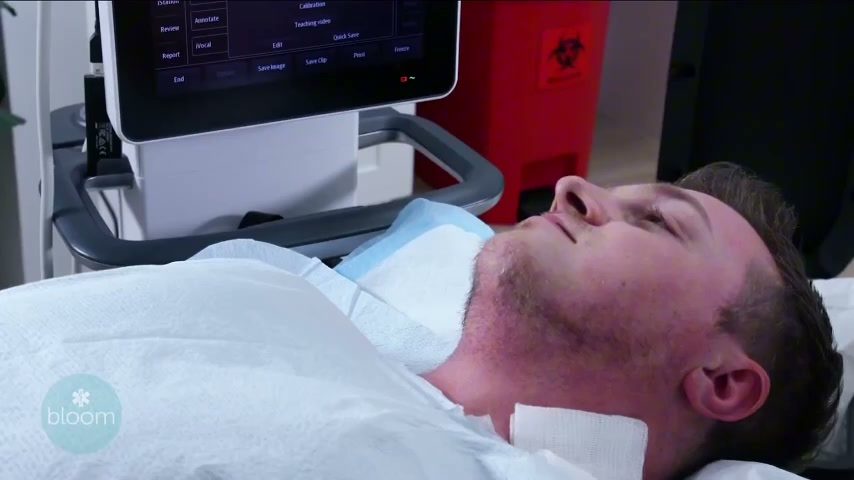
Phase 01, at 12 o’clock
The Foundation Reset
It starts with the Reboot Protocol: both sides over two days, to calm the stress response, alongside Dopamine Chair and BrainTap sessions.
The Reboot ProtocolBurnout is exhaustion driven by persistent stress: tired all day, switched on all night. Part of it is physical, a sympathetic nervous system that will not stand down, which Reboot Vitality calls stress physiology overload. Care here starts with a consultation and nervous system evaluation, then the Reboot Protocol™, an ultrasound-guided dual stellate ganglion block, followed by diagnostics to find what is draining you. Individual experiences vary.
If this sounds like you
It is hard to make it through the day, or to commit to work you used to handle easily. You sleep and still wake up tired, and small things set you off.
In Tampa’s legal, medical and corporate circles, this is often mistaken for a lack of discipline. More often, it is a stress response that has stopped switching off.
Time off helps for a week. Then the pressure returns, and the body goes straight back into survival mode.
That is why our method starts with the nervous system itself, before anything else is layered on top.
Understanding burnout
Burnout is a state of exhaustion caused by persistent stress. Reboot Vitality calls its physical side stress physiology overload: a sympathetic nervous system that stays switched on, so the body keeps running in survival mode long after the pressure has passed.
Workload, friction, too little rest and too little support keep the stress response firing.
The sympathetic side of the nervous system, which the stellate ganglion helps regulate, stops standing down.
Sleep, mood, focus and energy take the strain: the tired but wired pattern.
If your evaluation points somewhere other than the nervous system, we will tell you, and point you to the right next step.
The signs
If several of these sound familiar, a nervous system evaluation is the place to start.
The reset is built to help the body downshift out of survival mode. Individual experiences vary.
Common causes
When the work outgrows the hours, the scramble to keep up becomes the default, at the office or at home.
Feeling underappreciated, or chasing confusing directives, adds pressure on top of the work itself.
A poor sleep schedule, or no time to decompress between big tasks.
Without people to share the load, it builds faster.
A move, a loss, money trouble or a new career.
How we treat burnout
Burnout care at Reboot Vitality starts with the Reboot Protocol, an ultrasound-guided dual stellate ganglion block, to calm the stress response. The phases after it look for what is draining you: diagnostics first, then targeted restoration and optimization.
Phase 01, at 12 o’clock
It starts with the Reboot Protocol: both sides over two days, to calm the stress response, alongside Dopamine Chair and BrainTap sessions.
The Reboot ProtocolPhase 02, at 3 o’clock
Diagnostics look for what is draining you: environmental exposures, inflammation and gut health.
Start with the resetPhase 03, at 6 o’clock
Once imbalances are identified, targeted and personalized therapies strengthen core systems.
Start with the resetPhase 04, at 9 o’clock
With the foundation in place, this phase focuses on energy, clarity and long-term performance.
Start with the resetYour options
Including the ones we do not offer, and doing nothing at all. Most people do more than one.
| Option | What it involves | Time it takes | Worth knowing |
|---|---|---|---|
| The Reboot method | The Reboot Protocol first, then diagnostics and targeted therapies | Two consecutive days to start; the full program typically runs 3 to 6 months | Built for a stress response that will not switch off. Individual experiences vary. |
| Time off | A vacation, or a break from work | Days to weeks | It helps, and it is worth taking. If the pattern returns the week you do, the stress response may need attention too. |
| Stress management | Sleep, training, coaching or therapy | Weeks to months, and ongoing | Worth doing either way; the reset works alongside it, not instead of it. |
| Medication from your doctor | A prescription, taken daily | Ongoing | It has a real place. Never stop a medication without talking to the doctor who prescribed it. |
| Doing nothing | Waiting for the pressure to ease | Open ended | Sometimes it does ease. If it has lasted months, an evaluation is a reasonable next step. |
Recovery and timeline
Days one and two
Day one: consultation and nervous system evaluation, the right side, 20 to 30 minutes of monitoring, home. Day two: the left side, monitoring, home.
After the reset
Your lab work and evaluation are reviewed with you, and the next phases are planned from what they find.
The full program
The complete burnout program typically spans 3 to 6 months, depending on your diagnostic results and how deeply your systems have been affected.
Individual experiences vary.
Do not wait
Reboot Vitality does not provide emergency care.
Cost and coverage
Your cost is set at your consultation and depends on the plan you choose. Coverage varies by insurance carrier and plan; financing is available through Cherry and CareCredit, subject to credit approval.
Cost and coverage, in detailPatient reviews
I had forgotten what it felt like to be happy, calm or get good sleep. The DSGB brought those things back and I couldn’t be more thankful.
It was like my fight or flight panic button was no longer jammed at full speed.
Awesome treatment all around; I feel better than I have in years.
Individual experiences vary.

Your physician
Dr. Michael Meighen, Medical Doctor
Dr. Michael Meighen is double board-certified in Physical Medicine & Rehabilitation and Pain Medicine, with advanced expertise in fluoroscopy and ultrasound. Patients know him as Dr. Mike.
He leads every burnout plan at Reboot Vitality, from the first nervous system evaluation to the Reboot Protocol itself, and the phases are planned with you from what that evaluation finds.
Medically reviewed by Dr. Michael MeighenMedical Doctor, Reboot Vitality · Review date to confirm
Visit the clinic
Burnout care happens at our clinic at 220 N Howard Ave, Suite B, located inside AgeRejuvenation in North Hyde Park, just blocks from the University of Tampa and Julian B. Lane Riverfront Park. Patients come from across Hillsborough and Pinellas Counties for the two-day protocol.
Patients come from Hyde Park, Downtown, Palma Ceia, South Tampa, Westshore, Downtown St. Pete and Old Northeast.
Book online or call
Request your consultation and nervous system evaluation. Prefer to talk it through? Call (844) 727-2192, Monday to Friday, 9:00 to 5:00.
Questions about burnout
Pick a question. Still wondering? Call (844) 727-2192
Waking up on edge, feeling exhausted no matter how much you sleep, low motivation and feeling emotionally overwhelmed are among the most common. Irritability, brain fog and muscle tension often come with them.
Persistent stress keeps the sympathetic, fight or flight side of the nervous system switched on. That can leave you on edge and make energy hard to hold onto, even with good sleep and a healthy diet.
Chronic stress is the ongoing activation of your stress response from any source: work, relationships, health or life circumstances. Burnout is a specific pattern that grows out of prolonged work stress, with emotional exhaustion, detachment from work and a reduced sense of accomplishment.
Many people look for options beyond medication, and the Reboot method is led by an in-clinic injection protocol and diagnostics. If you already take a medication, keep taking it as prescribed and talk to your prescriber before changing anything.
The Reboot Protocol itself takes two consecutive days. The complete burnout program typically spans 3 to 6 months, depending on your diagnostic results. Individual experiences vary.
Coverage varies significantly by insurance carrier and plan type. We recommend contacting your insurance provider to verify coverage before your first visit. Financing is available through Cherry and CareCredit, subject to credit approval.
Close the loop
Book your consultation and nervous system evaluation, or call us Monday to Friday, 9:00 to 5:00.